TL;DR
- A website redesign is needed when the site looks outdated, loads slowly, does not work well on mobile devices, does not bring inquiries, or no longer reflects the real level of the business.
- An old website is not only a visual problem. It can affect trust, SEO visibility, advertising results, and conversion rate.
- The most common mistake is redesigning only to make the site look prettier, without analyzing structure, content, speed, analytics data, and the user journey.
- At AdwayCreative, we treat redesign as a business project: we keep what works, fix weak points, and build a stronger foundation for SEO, AI visibility, and future growth.
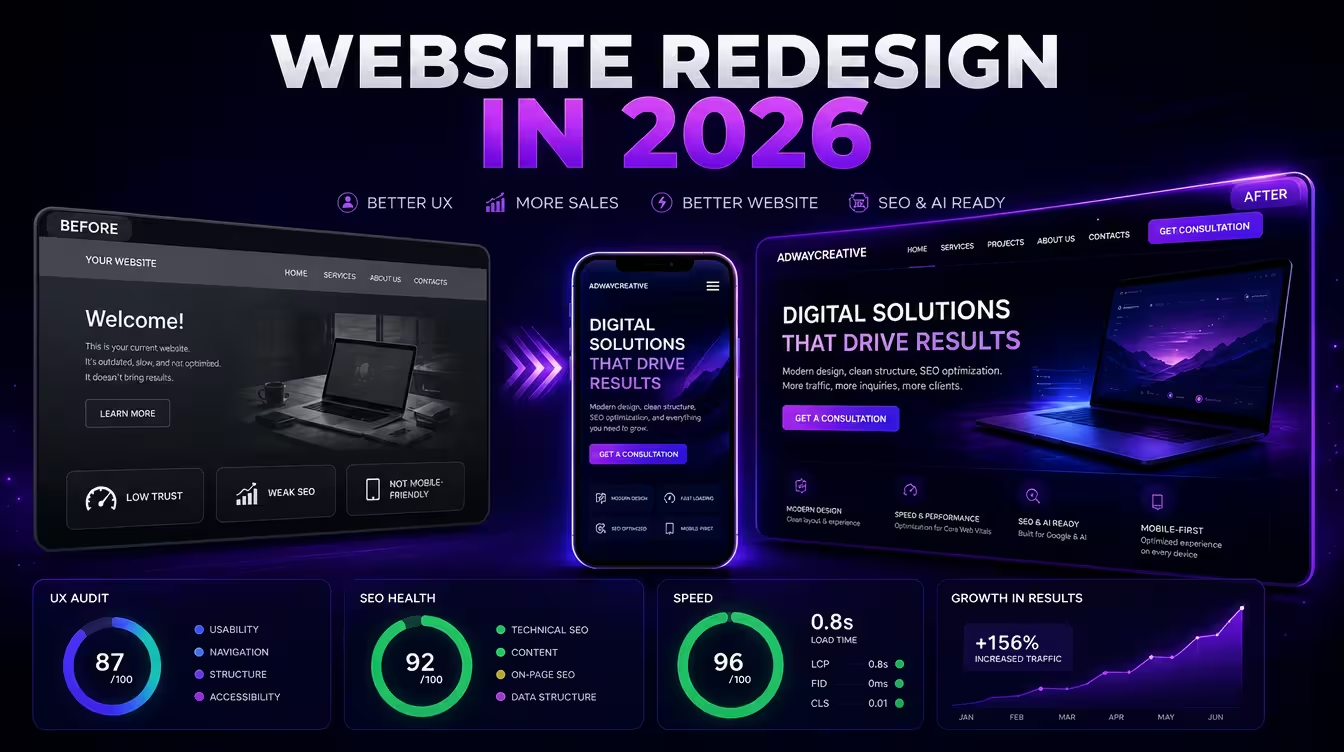
When does a business need a website redesign?
A business needs a website redesign when the current website no longer reflects the real level of the company, does not work well on mobile devices, loads slowly, does not generate enough inquiries, or has a weak SEO structure. A redesign should not be only a visual change. It should improve the whole web system: structure, content, UX, speed, trust, and measurement.
Many companies delay redesign because the website still opens. But that does not mean the website works well. It may be losing clients every day without the business seeing the loss directly.
The website is often the first place where a potential client decides whether to take the business seriously. If it looks outdated, confusing, or difficult to use, the issue is not only aesthetic. It is a problem of trust, sales, and digital visibility.
What does website redesign actually mean?
Website redesign does not simply mean a new look. A real redesign reviews how the website supports the business.
It can include:
- new UX and UI structure
- better mobile experience
- updated content and service pages
- clearer conversion paths
- better calls to action
- technical and speed improvements
- SEO structure review
- redirect planning
- analytics and tracking setup
- image optimization
- preparation for paid campaigns and future content
If a redesign changes only colors and visuals but keeps the same weak structure, the business problem usually remains.
Sign 1: The website looks outdated compared with your business
A website can become outdated even if it is technically online. The business may have grown, changed positioning, expanded services, improved quality, or started working with larger clients, while the website still communicates an older stage.
Signs of outdated design include:
- old visual style
- weak typography and spacing
- generic sections
- poor image quality
- unclear service presentation
- missing case studies or proof
- no clear brand personality
- design that does not match the company’s current level
What is lost with outdated design?
Outdated design can reduce trust before the user has even read the offer. For many service businesses, the website is part of the first impression. If that impression feels weak, potential clients may assume the service is weak too.
Sign 2: The mobile version is inconvenient
Mobile experience is no longer a secondary detail. For many businesses, most traffic comes from mobile devices. If the mobile version is hard to read, slow, crowded, or difficult to navigate, the website loses potential clients.
Common mobile problems:
- text is too small
- buttons are difficult to tap
- forms are hard to complete
- sections are too long or crowded
- navigation hides important pages
- images take too much space
- the call to action appears too late
- pages load slowly
AdwayCreative Pro Tip
A website that works well only on desktop is not a modern business tool. Mobile UX should be planned from the start, not fixed at the end.
Sign 3: The website does not generate enough inquiries
If the website has traffic but does not bring inquiries, the problem may be in the conversion path. Visitors may arrive, but they do not understand what to do next or do not trust the page enough to contact you.
Weak inquiry performance can be caused by:
- unclear value proposition
- weak first screen
- missing trust signals
- poor service structure
- hidden or generic CTA buttons
- too long contact forms
- no clear process explanation
- no proof of results
- wrong traffic-to-page match
In this case, redesign should focus not only on visuals but also on CRO: the path from visitor to inquiry.
Sign 4: The website is slow or technically unstable
Slow websites lose users and weaken both SEO and advertising performance. Speed also affects trust. If a website feels heavy or unstable, users may hesitate before submitting a form or making a purchase.
Technical problems often appear through:
- slow loading on mobile
- large unoptimized images
- too many scripts or plugins
- layout shifts
- broken forms
- errors after updates
- poor Core Web Vitals
- unstable tracking
What should be checked?
- page speed
- image sizes
- mobile performance
- hosting and caching
- plugin load
- technical errors
- forms and tracking
- analytics events
Sign 5: Google and AI search engines do not understand the website well
A modern website must be clear not only for users but also for search engines and AI systems. If the structure is confusing, pages overlap, headings are weak, and content does not answer real questions, visibility suffers.
SEO and AI visibility problems include:
- unclear page hierarchy
- thin service pages
- missing internal links
- poor metadata
- duplicate or vague content
- weak FAQ structure
- missing schema where relevant
- no connection between service pages, blog content, and case studies
A redesign is a good moment to rebuild the information architecture, not only the visual interface.
Redesign or new website: what is the difference?
A redesign improves an existing website. A new website starts from a cleaner foundation when the old structure, technology, or business logic no longer supports the company.
Redesign is suitable when:
- the website has useful existing content
- some pages already rank in Google
- the technical foundation can be improved
- the business model is similar but the presentation is weak
- the main goal is better UX, CRO, speed, and content structure
A new website is better when:
- the structure is too weak to repair
- the website is technically outdated
- the business has changed significantly
- the CMS or builder limits future work
- SEO, content, and user journeys need a full rebuild
How much does website redesign cost?
The cost of website redesign depends on the scope: number of pages, content changes, UX work, SEO migration, technical cleanup, integrations, tracking, and whether the design is being refreshed or rebuilt deeply.
A lighter redesign may focus on key pages, mobile UX, CTA improvements, speed, and content updates. A deeper redesign can include full information architecture, new layouts, SEO migration, image optimization, analytics setup, and future campaign preparation.
For context around budgets and scope, see our guide to website development cost.
What does professional redesign include?
- audit of the current website
- analysis of traffic and conversion data
- review of SEO pages and existing rankings
- UX structure and user journey planning
- new visual direction
- mobile-first design
- content editing or rewriting
- CTA and form improvements
- performance optimization
- redirect planning
- analytics and conversion tracking
- QA before and after launch
The goal is to improve how the website works for users, search engines, advertising campaigns, and the business team.
What should the client provide during redesign?
The client does not need to prepare everything alone, but useful input helps the redesign become more accurate.
- business goals
- current problems with the site
- priority services or products
- target audience
- examples of desired direction
- existing analytics access
- important pages that must be preserved
- brand assets
- case studies, reviews, or proof points
How AdwayCreative looks at redesign
We do not treat redesign as decoration. We look at what the website must do for the business: attract the right traffic, explain the offer, build trust, support SEO, and convert visitors into inquiries or sales.
How to avoid losing SEO during redesign
SEO loss during redesign usually happens when important pages are deleted, URLs change without redirects, metadata is ignored, internal links are broken, or content is shortened without strategy.
Before launch, a redesign should include:
- list of current indexed pages
- review of pages with traffic and rankings
- redirect map for changed URLs
- metadata migration
- internal link review
- content preservation where needed
- technical SEO checks
- Search Console monitoring after launch
For a broader comparison of organic and paid visibility, see SEO vs Google Ads.
How redesign affects Google Ads
Redesign can improve advertising results when landing pages become clearer, faster, and easier to convert. It can also hurt campaigns if URLs, tracking, or conversion actions are changed without planning.
Before launching the redesigned website, check:
- conversion tracking
- thank-you pages
- forms and phone clicks
- landing page URLs
- UTM structure
- page speed
- CTA visibility
- message match between ads and pages
A redesign should make campaigns stronger, not interrupt measurement.
Mistakes to avoid during redesign
1. Changing the visuals but keeping the same weak structure
If the user journey stays confusing, the business problem remains.
2. Deleting pages that have SEO value
Pages with rankings, links, or traffic should be reviewed before removal.
3. Skipping the redirect plan
Changed URLs need proper redirects so users and search engines reach the right pages.
4. Thinking only about desktop
Mobile users must get a fast, clear, and easy experience.
5. Leaving old text without editing
New design with old unclear content rarely solves the conversion problem.
6. Not testing forms and CTA buttons
The final step must work reliably on every device.
7. Not checking the website after launch
Post-launch QA is essential for SEO, analytics, speed, and conversion tracking.
What does a good redesign process look like?
| Stage | What happens | Why it matters |
|---|---|---|
| Audit | Website, traffic, SEO, UX, conversions | Weak points are identified before design starts |
| Strategy | Goals, pages, structure, user journey | The redesign supports business outcomes |
| Content | Service pages, headings, CTAs, trust signals | The site communicates clearly |
| Design | UX/UI, mobile-first layout, visual system | The website feels current and usable |
| Build | Implementation, speed, forms, integrations | The design becomes a working system |
| SEO migration | URLs, redirects, metadata, internal links | Existing visibility is protected |
| QA | Testing before and after launch | Problems are caught before they affect users |
Does AdwayCreative work only on redesign projects in Sofia?
AdwayCreative is based in Sofia, but we work with businesses across Bulgaria and on international projects. For a redesign project, location is less important than understanding the business model, user journey, SEO structure, and conversion goals.
If you are comparing options for website development in Sofia, also consider whether the team can protect SEO, improve CRO, and prepare the website for future growth.
For wider context around planning a website project, see the website creation process.
When is redesign not enough?
Redesign is not enough when the business needs a completely different structure, new functionality, new positioning, or a new digital strategy.
In those cases, the project may need a new website, a full content rebuild, a new SEO architecture, eCommerce development, or a broader digital growth plan.
If your project includes online sales, see our guide to online store development. If the whole digital system needs alignment, see 360 digital strategy.
Conclusion: redesign should solve a business problem, not only a visual problem
A website redesign is worth doing when it improves how the site works for the business: better trust, stronger UX, clearer content, faster speed, stronger SEO, better measurement, and more qualified inquiries.
If the redesign is only a new visual layer over the same weak structure, the result will be limited.
The better approach is to treat redesign as a chance to rebuild the website as a stronger digital business tool.
Need a redesign that is more than a new look?
AdwayCreative can help you analyze the current website, preserve what works, improve UX, update content, protect SEO, set up tracking, and build a stronger foundation for future growth.
Frequently asked questions
How do I know whether my website needs a redesign?
Your website probably needs a redesign if it looks outdated, is difficult to use on mobile, loads slowly, does not bring enough inquiries, has weak SEO structure, or no longer reflects the current level of your business.
How often should a website be redesigned?
There is no fixed rule, but many business websites need a serious review every few years. The timing depends on business changes, technology, user behavior, SEO performance, and conversion results.
Can redesign hurt SEO?
Yes, if it is done without planning. SEO can suffer when important pages are deleted, URLs change without redirects, internal links break, or content is removed. A proper redesign includes SEO migration and post-launch monitoring.
What is the difference between redesign and a new website?
Redesign improves the existing website, while a new website rebuilds the structure, technology, and content from a cleaner foundation. The right choice depends on how weak the current website is.
How much does website redesign cost?
The price depends on the number of pages, UX work, content updates, SEO migration, technical cleanup, tracking, integrations, and whether the project is a light refresh or a deep rebuild.
Do we need to prepare all new copy?
Not necessarily. The client should provide business context, goals, services, and important details. The agency can help with structure, editing, rewriting, CTA logic, SEO content, and FAQ sections.
What happens to old pages during redesign?
Old pages should be reviewed before removal. Pages with traffic, rankings, links, or business value should be preserved, improved, or redirected properly.
Can redesign improve advertising results?
Yes. A faster, clearer, more trustworthy website can improve landing page performance, conversion rate, and campaign efficiency, as long as tracking and URLs are handled correctly.
- About the Author
- Latest Articles
- Client Results

With more than fifteen years of hands-on experience in PPC, SEO, content marketing and social media, Iliya Avramov has built deep expertise in combining performance marketing strategy with modern digital systems. As founder of AdwayCreative, he works across Google Ads, Meta Ads, technical SEO, conversion-focused websites and growth frameworks for startups, B2B companies, service businesses and eCommerce brands.
His work is focused on practical, measurable outcomes: stronger lead quality, cleaner tracking, better conversion paths and campaigns that connect advertising spend to business value. Iliya has managed marketing budgets from $1,000 to more than $100,000 per month and has supported campaigns across industries including agriculture, healthcare, education, retail, professional services and international eCommerce.
He works with tools and data sources such as Google Analytics, Google Ads, Meta Ads, Search Console, SEMrush, Ahrefs and AI-assisted analysis. His approach follows current best practices from resources such as Google Search Central and Think with Google, while grounding recommendations in real campaign data and client results.
His leadership has helped AdwayCreative earn multiple industry recognitions, including:
2020: 3D visualization and graphic design recognition (Acquisition International).
2021: Media innovator recognition (Corporate Vision).
2022: Martech recognition (Corporate Vision).
2022: Global Finance recognition (Global Banking & Finance).
2023: Global Finance recognition (Global Banking & Finance).
2023: Full-service marketing and advertising agency recognition (Innovation in Business).
2024: Highly reviewed social media marketing agency in Bulgaria (The Manifest / Clutch).
2025: Customer satisfaction recognition in advertising and marketing (Global Banking & Finance).
Author disclosure: Iliya Avramov is the founder of AdwayCreative and may reference agency services in his content. Opinions and recommendations are based on professional experience, campaign data and independent research, with no hidden sponsorships.