TL;DR (Quick Summary): If your Google Ads campaigns are driving clicks and traffic but failing to generate leads or sales, you are facing a common and frustrating digital marketing issue. The lack of Google Ads conversions is rarely down to a single cause. It is usually a combination of technical account settings, sub-optimal campaign structure, incorrect conversion tracking, or an ineffective landing page (CRO issues). Discover the 6 main B2B and e-commerce reasons why and their concrete technical fixes.
Introduction: When Clicks Fail to Turn Into Customers.
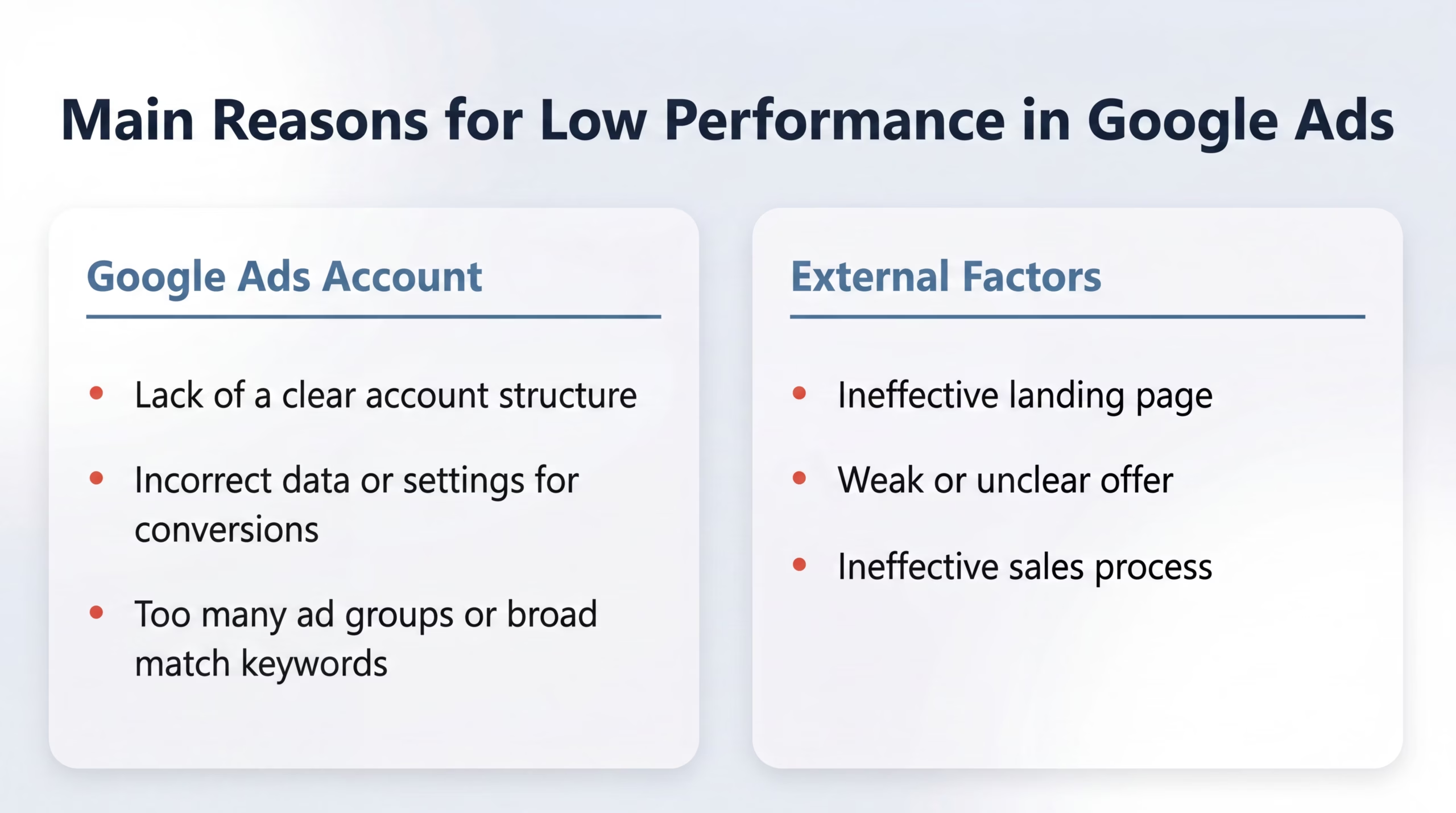
You are investing in Google Ads, you see clicks, traffic to your website is rising, but real sales or inquiries are missing. This is a common and frustrating problem that makes many businesses doubt the effectiveness of the platform. The truth is, the lack of Google Ads conversions is rarely caused by a single issue. Usually, it is a combination of factors that can be split into two main groups: problems within the Google Ads account setup itself, and external issues related to your website, offer, and sales process.
In this article, updated for the trends of 2025, we will explore the six main culprits behind the lack of results. We will show you how to diagnose each one and provide practical tips and solutions based on our 17+ years of experience managing successful digital campaigns.
Part 1: Inside the Machine – Problems Within Your Google Ads Account
Often, the root problem lies in the lack of proper preparation before launching campaigns.
The first step is to look under the hood of your advertising account. This is where fundamental errors are often hidden, sabotaging even the best-laid marketing strategies.
1. Lack of Clear Account Structure: The Foundation of Failure
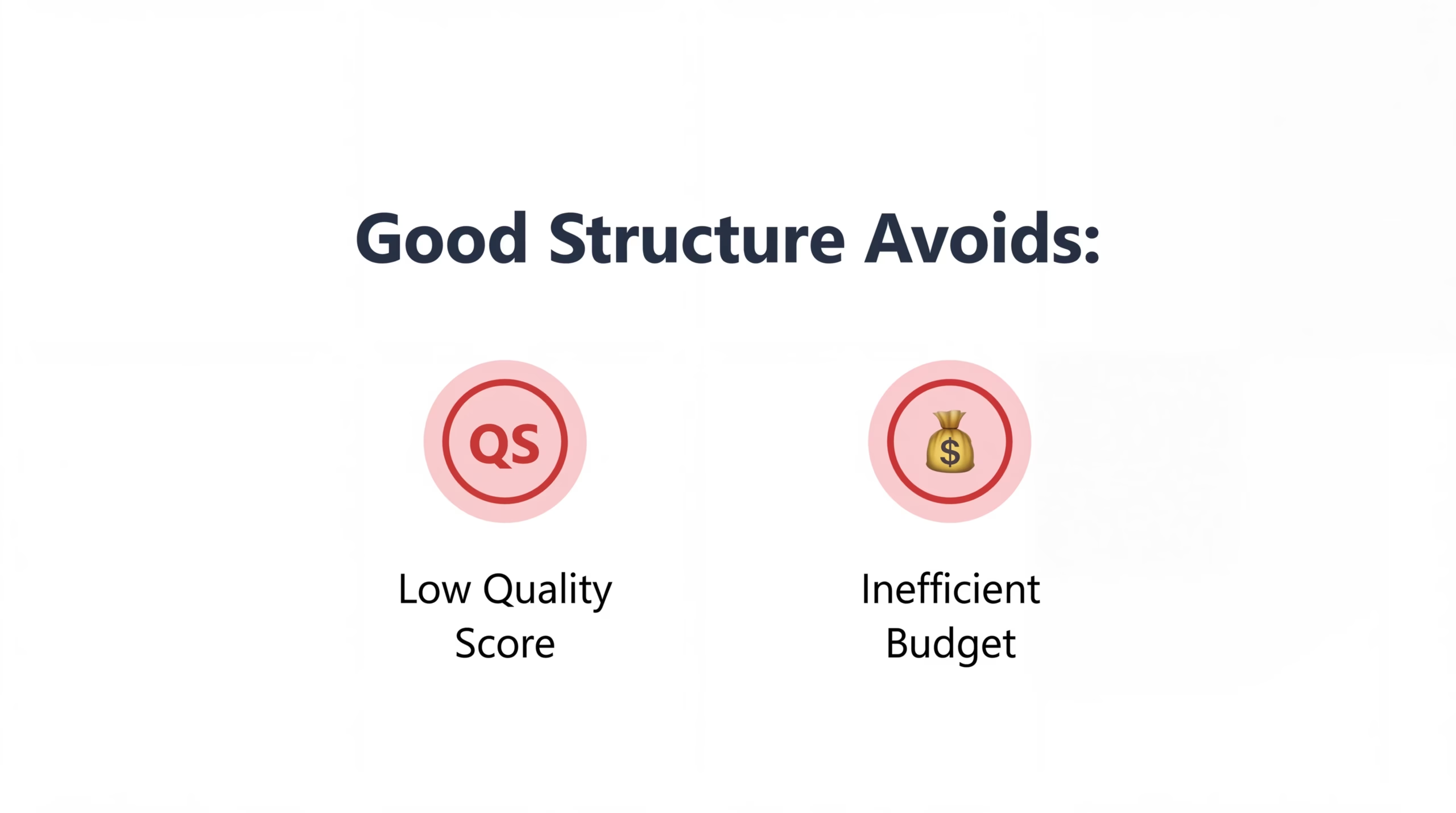
Imagine building a house without an architectural blueprint. The result would be chaotic and unstable. The same applies to your Google Ads account. Poor structure leads to inefficient budget spend, low Quality Score, and confuses Google’s AI algorithms, making it impossible to optimize your campaigns correctly.
Commonly encountered problems include having too many campaigns without a clear objective, where different ad groups compete against each other for the exact same keywords (known as “keyword cannibalization”). This not only drives up your Cost-Per-Click (CPC) but also prevents Google from gathering enough consolidated data for effective optimization.
Real-World B2B Case Study: Restructuring for a 120% Increase in Conversions
We faced this exact issue with a B2B software solutions client. Their account was a chaotic mix of 15 campaigns, each containing dozens of ad groups targeting overlapping keywords.
Before: The budget was scattered, and the Cost-Per-Acquisition (CPA) was over 250 BGN.
After: We consolidated the account into 4 strategic campaigns, segmented by product type and stage of the customer journey funnel (awareness, consideration, conversion). The result after 3 months was a 120% increase in Google Ads conversions and a 45% reduction in CPA. This clearly proves that a clean structure is a prerequisite for success.
Pro Tip: Start with a simple, logical structure. Segment your campaigns by product categories, services, geographic locations, or even profit margins. This gives you much better control and clarity over performance.
2. Incorrect Conversion Tracking: Flying Blind
This is perhaps the most critical and frequently overlooked reason. If you do not track conversions correctly, you are literally telling Google to optimize for the wrong goals. Modern Google Ads bidding strategies, such as Target CPA and Maximize Conversions, depend entirely on the quality of the data you feed them. If your data is flawed, the results will be catastrophic.
Common tracking setup mistakes:
- For Lead Gen: Using the “Every” count setting instead of “One” for contact form completions. This means if one user submits a form 5 times, it counts as 5 conversions instead of 1 unique lead, artificially inflating metrics and misleading the algorithm.
- For Call Tracking: Counting every call as a conversion without setting a minimum duration threshold (e.g., 60 seconds). This forces you to pay for wrong numbers or brief, unqualified calls.
- For E-commerce: Tracking micro-conversions (like “add to cart”) with the same conversion value weight as a purchase. This forces the AI to optimize for actions that do not generate direct revenue.
3. Flawed Keyword and Ad Group Strategy
Keyword selection is the heart of Search campaigns. In 2025, the trend is clear: the focus is shifting away from massive lists of exact keywords toward consolidated ad groups that target user search intent rather than just words.
The Danger of Broad Match: Over-reliance on unchecked Broad Match keywords is a guaranteed way to bleed your budget on irrelevant traffic. Although Google encourages its use paired with Smart Bidding, it requires intense monitoring and an extensive negative keyword list. In one of our projects, a client had activated Broad Match with zero negative keywords, resulting in 70% of their budget being wasted on search terms entirely unrelated to their core business.
2026 Strategy Tip: Consolidate! Instead of creating dozens of ad groups with 1-2 keywords (the outdated SKAG structure), group semantically related keywords into single, robust ad groups. This feeds the AI algorithm more data to optimize faster and more efficiently.
Part 2: Outside the Account – External Conversion Killers
Even with a perfectly configured account, if the user lands on a slow website or your offer is unappealing, conversions will not happen. This is where E-E-A-T (Experience, Expertise, Authoritativeness, Trustworthiness) principles apply. Although originally an organic SEO concept, building trust and authority is fundamental to paid conversions.
4. Ineffective Landing Page (CRO Issues): The Great Drop-off
Your landing page is where conversions actually happen. You can have the best ad copy in the world, but if your page loads slowly, is confusing, or lacks mobile responsiveness, you will lose the customer. Data shows that even a 1-second delay in page load time can cut conversions by 7%.
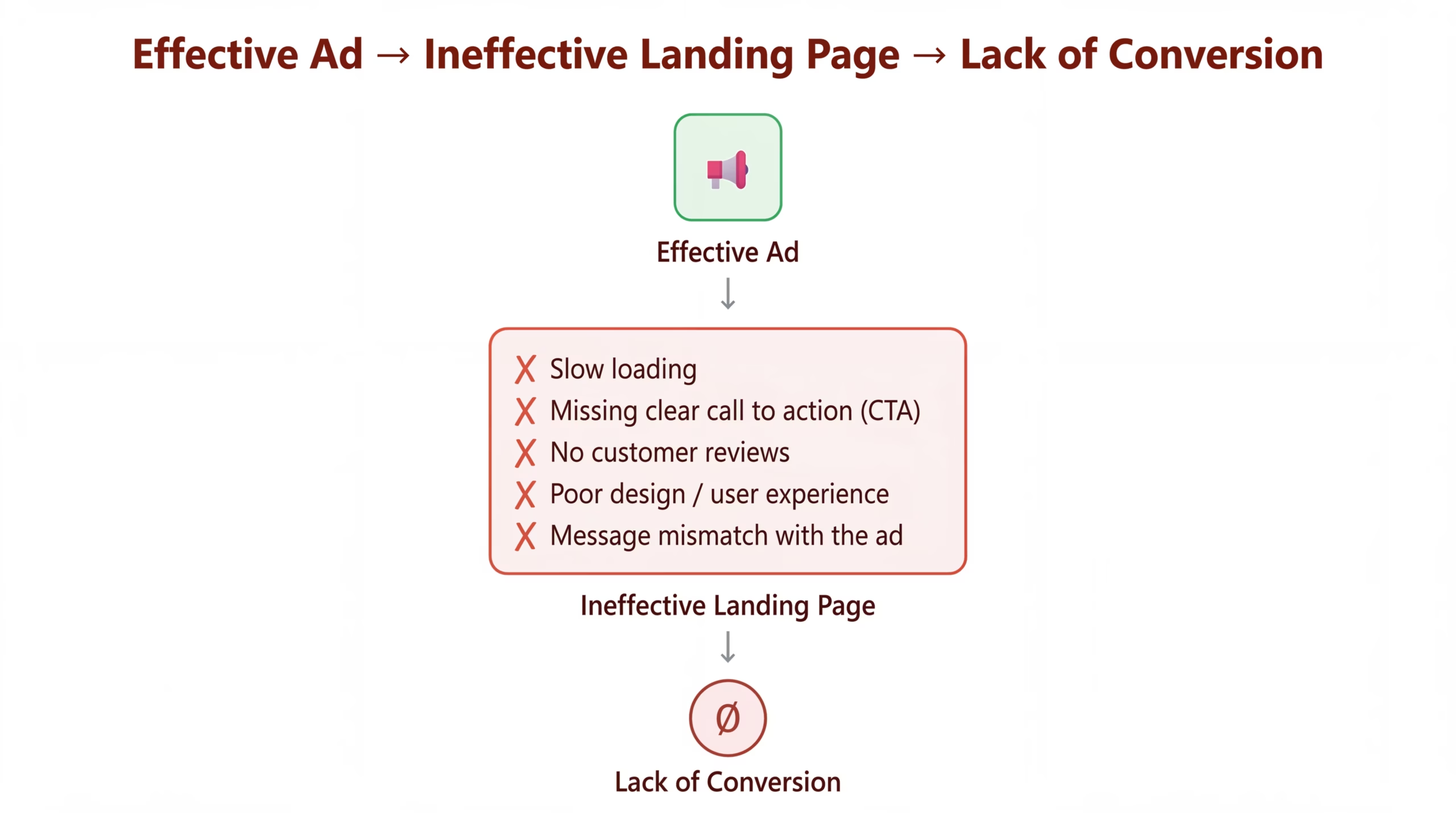
Landing page issues that kill conversions:
- Technical: Slow load speed, poor mobile user experience (over 60% of search traffic is mobile), or broken forms and buttons.
- Message Mismatch: The ad promises a “50% discount,” but the landing page makes no mention of it. This is the fastest way to destroy user trust.
- Lack of Social Proof: Absence of customer reviews, trust badges, certificates, or clear contact details. Users seek proof they can trust you, especially if they are discovering your brand for the first time.
Continuous Conversion Rate Optimization (CRO) is mandatory. Ensure your landing page fulfills the ad’s promise, features a prominent and clear Call-to-Action (CTA), and builds strong brand credibility.
5. Weak or Unclear Core Offer
Many businesses focus heavily on technical Google Ads metrics while ignoring their core proposition: what are you actually offering the customer? Your offer is the combination of your product or service, price, bonuses, guarantees, and the emotional value you deliver.
If your competitors offer the exact same product but with free shipping, a longer warranty, or better customer support, even the most optimized campaign will struggle to convert. You must answer the ultimate buyer question: “Why should I choose you over anyone else?”
Case Study: How a Simple Offer Restructuring Tripled Conversion Rates
We managed campaigns for an online cosmetics store that had a high click-through rate (CTR) but very low conversion rates. Instead of slashing prices, we analyzed the competition and restructured the offer. We added “Free consultation with a professional aesthetician for orders over 50 BGN” and a “30-day money-back guarantee.” This change, highlighted prominently in the ads and landing page, tripled the conversion rate in under a month without altering product pricing. That is the power of a compelling offer.
6. Inefficient Sales Process: The Broken Link
This is incredibly common for B2B and lead-generation businesses. Google Ads can bring in dozens of high-quality leads daily, but if your sales team is slow to respond, unprepared, or lacks follow-up processes, those leads will never close.
Studies show that the chance of qualifying a lead decreases by 10x if you wait longer than 5 minutes to respond. Review your entire pipeline:
- How fast do you respond to new inquiries?
- What is the quality of your sales script?
- Do you have structured follow-up steps?
- Are you measuring how many digital leads actually turn into closed deals?
Integrating a CRM system and setting up offline conversion tracking are key to getting the full picture. This allows you to optimize campaigns not just for clicks or cheap leads, but for high-value sales.
Conclusion: Transforming Google Ads into a Profit Engine
A lack of conversions in Google Ads is a complex challenge, but it is entirely solvable with a systematic approach.
Start with a full audit: Check your account structure, conversion tracking accuracy, and keyword strategies. Then expand your view to optimize your landing page user experience, craft an irresistible offer, and streamline your sales follow-up process. By aligning every step of the funnel, you will stop wasting marketing budget and start generating predictable, scalable revenue.
- About the Author
- Latest Articles
- Client Results

With more than fifteen years of hands-on experience in PPC, SEO, content marketing and social media, Iliya Avramov has built deep expertise in combining performance marketing strategy with modern digital systems. As founder of AdwayCreative, he works across Google Ads, Meta Ads, technical SEO, conversion-focused websites and growth frameworks for startups, B2B companies, service businesses and eCommerce brands.
His work is focused on practical, measurable outcomes: stronger lead quality, cleaner tracking, better conversion paths and campaigns that connect advertising spend to business value. Iliya has managed marketing budgets from $1,000 to more than $100,000 per month and has supported campaigns across industries including agriculture, healthcare, education, retail, professional services and international eCommerce.
He works with tools and data sources such as Google Analytics, Google Ads, Meta Ads, Search Console, SEMrush, Ahrefs and AI-assisted analysis. His approach follows current best practices from resources such as Google Search Central and Think with Google, while grounding recommendations in real campaign data and client results.
His leadership has helped AdwayCreative earn multiple industry recognitions, including:
2020: 3D visualization and graphic design recognition (Acquisition International).
2021: Media innovator recognition (Corporate Vision).
2022: Martech recognition (Corporate Vision).
2022: Global Finance recognition (Global Banking & Finance).
2023: Global Finance recognition (Global Banking & Finance).
2023: Full-service marketing and advertising agency recognition (Innovation in Business).
2024: Highly reviewed social media marketing agency in Bulgaria (The Manifest / Clutch).
2025: Customer satisfaction recognition in advertising and marketing (Global Banking & Finance).
Author disclosure: Iliya Avramov is the founder of AdwayCreative and may reference agency services in his content. Opinions and recommendations are based on professional experience, campaign data and independent research, with no hidden sponsorships.